Eggs for breakfast, warm and sizzling, maybe some biscuits and gravy, or peppered cottage cheese on the side. The smells from the kitchen roam out to the porch of the antebellum home, all too familiar. We expect what’s coming, the usual order of things, for all its goodness and comfort, and it’s downsides and contradictions. We think we are smart enough to be able to recognize the flaws in the belief systems that surround us. Surely, enough awareness of a problem, or taking a new approach entirely, will rid us of blame. Still though, we are left shocked, in utter disbelief, when all we thought we knew is disproven, time and time again! Flannery O’Connor’s fiction challenges the worldview of the religious and the intellectual, particularly in her short stories Good Country People and The Lame Shall Enter First. It would seem upfront that these two belief systems are pitted against one other, but in her characteristic Southern Gothic style, they are both confronted by the unexpected and grotesque, with meager efforts to prove themselves in the face of horrific, unimaginable, darkness.
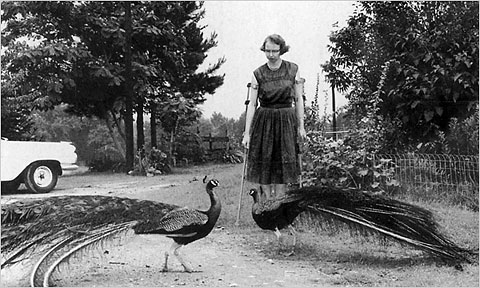
O’Connor herself, is in many respects an ‘intellectual’ born out of the South, and was forced to return to Georgia from her academic life in New York due to her illness. It is no surprise that present in much of her fiction is the well educated atheist, or scientific rationalist, against the backdrop of the religious south. In Good Country People, Hulga, formerly Joy Hopewell, is an embodiment of the reformed catholic, modern intellectual woman. "One of her major triumphs was that her Ph.D. in philosophy had not made her ashamed of using the word ‘joy’ but she had much prefer people to call her Hulga.". The immense pride over her intellectual persona makes Hulga feel above her religious counterparts and the “good country folk”. In Joy-turned-Hulga’s world, she has been disillusioned from the notions of faith and sentimentality. God is dead, good and evil are just perceptions, nothing exists. Similarly, in The Lame Shall Enter First, Sheppard is the rationalist father who believes science and reason can transcend suffering. "He didn’t believe in anything. He believed in helping people.", so much so that he is obsessed with ‘saving’, ironically, a troubled orphan boy Rufus Johnson with a club foot, and neglects the emotional and spiritual needs of his own son, who is grieving the loss of his mother. Sheppard’s reasoning goes so far as to classify any spiritual or emotional inclinations as weakness. "He had never before felt so completely free of his own needs”, dismissing his own grief, and not allowing the space for his son either.
Yet Flannery O’Connor still lived her life a devoted Catholic, and her religious side and upbringing take constant form in the Southern setting and characters. Mrs. Hopewell and Mrs. Freeman in Good Country People are simple minded, good Christian, southernly hospitable mothers. But the threats of Southern conventions, saying “have a blessed day”, are not the real religious threats in these stories. Instead, O’Connor uses the more shocking, gruesome, and transgressive manifestations of religion as the impetuses of the stories. The bible salesman, Manly Pointer, is the cause of Joy’s downfall at the end of Good Country People, who, after seducing her, steals her leg and reveals his twisted affinity for stealing artificial body parts from women. His last words, “You ain’t so smart. I been believing in nothing ever since I was born!” shatters Hulga’s need to separate herself from helpless “good country people”. Without her wooden leg, she herself is vulnerable. Her education and intellectual mask could not save her from the multi-layered bible salesman, from the reality that she is no less pitiful than her religious counterparts. The Lame Shall Enter First has a similar trajectory. Sheppard tries to impose his scientific rationalism on Rufus, to which he responds: “Satan has them. They belong to him.”, “You think you’re too smart to believe in Jesus. Well, you ain’t”, and “He’ll strike you down in your pride”. Meanwhile, Sheppard fails to notice that Rufus is filling the void of emptiness in his own son, Norton, telling him “He died to redeem you, and He will.”, that his mother is in heaven. A belief Sheppard has long denied him of. Sheppard’s neglect of any emotional or spiritual inclination lead to his son hanging himself to be with his mother in heaven. Sheppard’s ignorance to such yearning, and disallowing the mystical or divine to exist at all, was a grave mistake that resulted in tragedy.
O’Connor’s fiction, in Southern Gothic fashion, is gruesome and disturbing. The endings are shocking and unexpected, and force the reader to confront the strange and difficult. Reality is in fact stranger than fiction. These stories are a commentary on the flaws in blind, dogmatic faith that is hypocritical. But it is also aware of the pitfalls in reason. Neither lead to salvation. We are surrounded by mystery, an undeniable religious inclination exist inside us all. For when we are inevitably faced with the macabre, the grotesque, the horrific and unbelievable, that is when folklore, rituals, and prayers are created.
O’Connor, Flannery. “The Lame Shall Enter First.” Everything That Rises Must Converge. In Collected Works, edited by Sally Fitzgerald, Library of America, 1988, pp. 445–469.